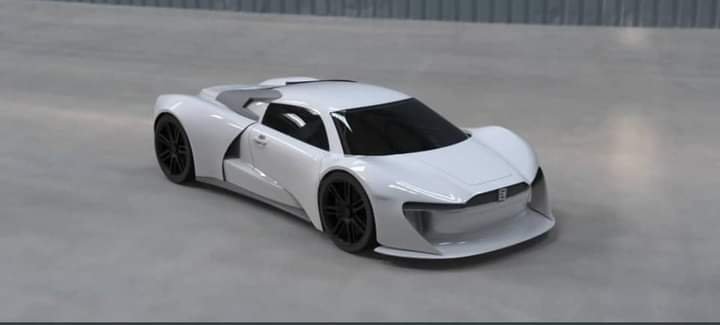
The Made in Afghanistan Supercar that went viral captured the world’s imagination in late 2022 and early 2023. A sleek, black sports prototype rolled out in snowy Kabul streets, drawing crowds and sparking global headlines. Called the Mada 9 initially, it later became the Simurgh. This unlikely creation from a country better known for rugged terrain and decades of conflict represented something rare: Afghan ingenuity on four wheels.
I remember scrolling through social media when the first videos surfaced. A low-slung coupe glided through Kabul’s winter landscape while onlookers, some in traditional attire, gathered in awe. The mix of surprise and pride hit hard. In a place where everyday mobility often means tough Toyota Hilux pickups navigating mountain passes, here was a homegrown sports car. It wasn’t just metal and fiberglass — it felt like a statement of resilience.
What Is the Afghanistan Supercar? The Story Behind Mada 9 and Simurgh
The vehicle started as the Mada 9, a prototype developed by Entop, an Afghan design studio, in collaboration with the Afghanistan Technical Vocational Institute (ATVI) in Kabul. Engineers worked for over five years at the Navavari (Innovation) Center. The project involved around 30 people, including technicians and designers, many drawing on local skills honed in repair shops and vocational training.
Mohammad Reza Ahmadi, Entop’s CEO, served as chief designer and engineer. He envisioned a car that could showcase Afghanistan’s creative side. “I want to build something to put my country on the map again,” Ahmadi said. The Simurgh name draws from Persian mythology — a benevolent, powerful bird symbolizing renewal and heroism. It perfectly captured the team’s hopes.
A Taliban spokesman shared an early video in January 2023, which exploded online. People marveled at the effort amid Afghanistan’s challenges. The car later appeared at Kabul University with support from the IT Ministry, then made its international debut as the Simurgh at the 2023 Geneva International Motor Show in Doha, Qatar.
Design and Features: Batmobile Vibes with Afghan Roots
The Simurgh (also called Helmet or Black Swan in some reports) features a striking 2-door coupé body with aggressive lines. Its low-slung profile, flared wheel arches, and all-black aesthetic evoke the Batmobile or classic supercars. Designers crafted it with Afghanistan’s hilly terrains in mind, aiming for better handling than typical SUVs common on rough roads.
Key elements include:
- Lightweight composite materials for the body.
- A tubular frame chassis.
- F1-style pushrod suspension for sharper dynamics.
- Mid-engine, rear-wheel-drive layout with the powerplant mounted transversely behind the driver.
The interior shown at events appeared unfinished, with basic fittings and some visible gaps in panel alignment. This reflects its prototype status rather than a polished production model. Exterior details, like the “E” logo on the front, add a subtle branding touch.
Critics noted uneven build quality up close, such as imperfect windshield sealing. Yet for a project born in resource-constrained conditions, the overall form impressed many automotive enthusiasts.
Under the Hood: The Surprising Toyota Corolla Connection
One of the most talked-about aspects is the powertrain. The prototype runs on a modified 1.8-liter 1ZZ-FE inline-four engine, originally from a 2000–2004 Toyota Corolla. This reliable, ubiquitous powerplant suits Afghanistan, where Corollas and similar Toyotas dominate due to durability and parts availability.
Team members modified the engine for better response, claiming it gains power at higher speeds. Exact output figures, top speed, or 0-60 mph times remain undisclosed. No official performance data exists, and the setup likely delivers modest supercar numbers compared to European or Asian rivals with twin-turbo V8s or electric motors.
Plans include swapping to a more potent twin-turbo V8 sourced with help from a German racecar developer. An electric variant has also been mentioned as a future option. For now, the Corolla-derived heart underscores practicality over raw power — a clever adaptation in a country where high-performance parts are scarce.
How the Afghanistan Supercar Went Viral: From Kabul Streets to Global Headlines
The virality began with that snowy test-drive video shared on social media. Taliban officials praised it as Afghanistan’s first indigenous supercar, calling it a symbol of progress. Media outlets from WION to Bloomberg picked it up, highlighting the contrast between expectations and reality.
Online reactions ranged from genuine admiration (“Skill and talent from unexpected places!”) to skepticism and humor (“Allahu akCar” memes flooded forums). Reddit threads in r/BeAmazed and r/cars racked up thousands of upvotes. Supercar Blondie and other channels amplified the story, noting how the Mada 9 seemed to emerge from nowhere.
By October 2023, the rebranded Simurgh drew crowds at the Doha motor show. Over 45,000 people crowdfunded about $130,000 to transport and display it. The story resonated because it challenged stereotypes. In a nation facing economic hardship and international isolation, a group of locals built something aspirational with limited resources.
I once chatted with a mechanic friend in a similar developing context who rebuilt engines from scrap. He laughed and said, “We fix what others throw away — why not build dreams the same way?” That mindset echoes the Entop team’s approach.
Technical Specifications at a Glance
While full verified specs are limited due to the prototype nature, here’s what we know:
| Category | Details |
|---|---|
| Body Style | 2-door coupé |
| Layout | Mid-engine, rear-wheel drive |
| Chassis | Tubular frame with lightweight composites |
| Suspension | F1-style pushrod |
| Engine (Prototype) | Modified 1.8L I4 (Toyota 1ZZ-FE from ~2000-2004 Corolla) |
| Planned Upgrades | Twin-turbo V8; potential electric version |
| Development Time | Over 5 years |
| Team | ~30 engineers and technicians |
| Unveilings | Kabul (2022), Doha GIMS (2023) |
No official horsepower, torque, weight, or performance metrics have been released. Claims of competing with Bugatti-level cars appear aspirational rather than literal.
Pros and Cons of the Entop Simurgh Project
Pros:
- Symbol of local innovation and national pride in challenging circumstances.
- Uses readily available components, making maintenance potentially feasible locally.
- Eye-catching design that stands out in the supercar world.
- Crowdfunding success shows community support.
- Potential to inspire vocational training and engineering skills in Afghanistan.
Cons:
- Prototype build quality shows room for refinement (unfinished interior, sealing issues).
- Current engine power likely modest for true supercar performance.
- Limited transparency on exact technical details and testing data.
- Funding and supply chain hurdles in a sanctioned economy.
- Ambitious goals like Le Mans entry without clear timelines or partnerships yet.
Overall, the project shines more as an engineering proof-of-concept than a ready rival to Lamborghini or Ferrari.
Comparison: Simurgh vs. Other Entry-Level or Boutique Supercars
Placing the Simurgh alongside similar efforts helps contextualize it.
| Aspect | Entop Simurgh | Typical Boutique Supercar (e.g., small European kit or concept) | Mainstream Supercar (e.g., entry Porsche or Lotus) |
|---|---|---|---|
| Origin | Afghanistan, hand-built prototype | Often Europe/Asia, limited production | Mass-produced with global supply chains |
| Engine | Modified 1.8L I4 (upgradable) | V6 or small V8 | High-output flat-6, V8, or hybrid |
| Price Potential | Undisclosed (aims for accessibility?) | $200k–$500k+ | $100k–$300k+ |
| Focus | National symbolism + terrain adaptability | Exotic materials and performance | Balanced daily drivability + speed |
| Development | 5+ years, vocational institute | Professional teams with wind tunnels | Decades of R&D investment |
The Simurgh stands apart through its story and resourcefulness rather than outright performance numbers. It reminds me of early kit cars or Eastern European projects that started small but built reputations over time.
Future Plans: Le Mans Dreams and Beyond
Entop aims big. Ahmadi wants the Simurgh to undergo testing at the 24 Hours of Le Mans for validation before limited production and sales begin. The team seeks around €30 million ($49 million) in investment to finalize development, refine the design, and source a stronger powertrain.
No confirmed updates on funding success or new prototypes have surfaced prominently as of 2026, suggesting the project remains in early stages. Plans for an electric variant could align with global trends if realized. Initial sales would likely target Afghanistan and regional markets before going global.
Challenges include international sanctions, parts sourcing, and building a support network for exotic vehicles. Success would hinge on partnerships and continued local talent development.
The Human Side: Resilience in Unlikely Places
Building a supercar anywhere demands passion, but in Afghanistan it requires extra grit. The team worked through pandemic delays and economic shifts after the 2021 government change. Many drew skills from repairing imported cars or vocational programs — turning everyday mechanical know-how into something extraordinary.
A light moment: Imagine explaining to a traditional Afghan elder why young engineers spent years shaping fiberglass instead of fixing tractors. The pride in their eyes when the car moved under its own power must have been priceless. It humanizes the story beyond headlines.
Stories like this remind us that innovation isn’t confined to Silicon Valley or Stuttgart. It sparks in workshops worldwide, fueled by determination.
People Also Ask (PAA)
What is the name of Afghanistan’s supercar?
It was first unveiled as the Mada 9 and later rebranded as the Simurgh (also known as Helmet or Black Swan).
Who built the Afghanistan supercar?
A team from Entop Auto Design Company, led by Mohammad Reza Ahmadi, in partnership with the Afghanistan Technical Vocational Institute (ATVI).
What engine does the Afghan supercar use?
The prototype uses a modified 1.8-liter four-cylinder engine from a Toyota Corolla (circa 2000-2004 model).
Did the Taliban build a supercar?
The Taliban government praised and unveiled the project, but it was developed by private engineers and vocational trainers, not directly by the regime.
Where was the Simurgh supercar displayed internationally?
It made its global debut at the 2023 Geneva International Motor Show in Doha, Qatar.
FAQ: Common Questions About the Made in Afghanistan Supercar
Is the Simurgh a real running car or just a concept?
It is a functional prototype that has been driven, as shown in videos from Kabul. However, it remains in development and is not yet in production.
How much does the Afghanistan supercar cost?
No official price has been announced. The team focuses first on development and racing validation rather than sales figures.
Can the Simurgh compete with established supercars?
In its current prototype form, it serves more as a technology demonstrator. Future upgrades, including a V8, could boost performance, but it would need significant refinement to match top-tier models in speed or luxury.
Where can I see the Entop Simurgh?
Videos and photos from the Kabul unveiling and Doha motor show are widely available online. No public test drives or museum displays are currently listed.
What makes this supercar special despite its origins?
Its creation highlights human creativity and engineering passion under constraints. It uses local talent and adapts available technology, turning limitations into a unique narrative of hope and skill.
The Made in Afghanistan supercar story continues to inspire because it defies easy categorization. It isn’t perfect, and its path forward faces real hurdles. Yet the effort of Ahmadi and his team proves that bold ideas can emerge anywhere. Whether it reaches Le Mans or stays a remarkable prototype, it has already succeeded in putting Afghan innovation in the spotlight.
If you’re into cars that tell bigger stories, this one delivers. It reminds us that behind every viral moment lies real people welding, shaping, and dreaming — sometimes in the most unexpected workshops on Earth.
Related Posts
What Exactly Are These “Pregnant Cars”?
China's viral "pregnant car" videos exploded across social media in…