Esports has exploded from basement LAN parties into a global phenomenon, drawing millions to watch skilled players battle in games like League of Legends, Valorant, and Fortnite. The question on many minds—especially among gamers, investors, and traditional sports fans—is whether esports will eventually eclipse the NFL in scale, revenue, or cultural dominance.
I’ve followed competitive gaming since the early 2000s, when Counter-Strike tournaments felt underground and exciting. Back then, the idea of esports rivaling American football seemed laughable. Yet here we are, with esports events pulling concurrent viewers that sometimes match or exceed major sports moments. The NFL remains a powerhouse in the U.S., but esports benefits from borderless appeal and digital-native growth. Let’s break this down honestly, with real numbers and context, to see if esports is on track to become bigger than the NFL.
Current State of Esports: Explosive Growth in a Young Industry
Esports sits at an exciting crossroads. Global revenue estimates for 2025 hover around $5 billion, with projections varying by source but pointing to strong expansion. Some forecasts see the market reaching $7-10 billion by 2030-2034, driven by sponsorships, media rights, and merchandise. Audience figures tell an even bigger story: over 300 million dedicated enthusiasts worldwide by 2025, with total viewers (including casual) pushing toward 600-900 million in recent years, depending on how broadly you count streaming and highlights.
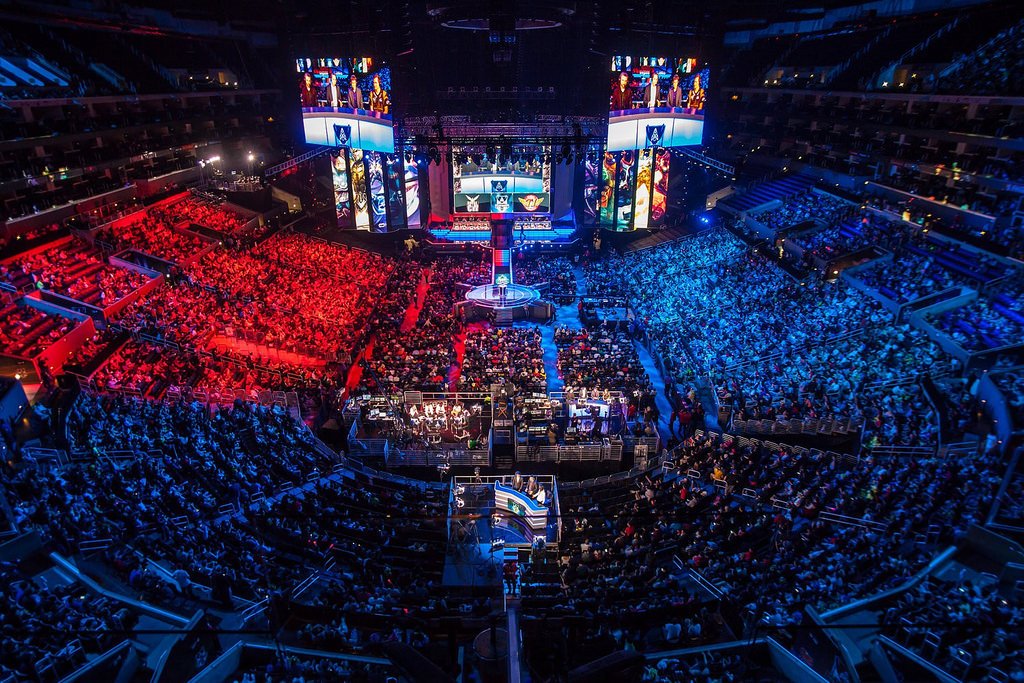
What fuels this? Accessibility. Anyone with a decent PC or mobile device can jump in, unlike traditional sports that demand physical infrastructure. Titles like League of Legends boast massive international followings, especially in Asia, where sold-out arenas in Seoul rival NFL stadium energy. I remember watching the 2018 LoL Worlds final—peak viewership hit around 200 million unique viewers, outpacing that year’s Super Bowl in some metrics. Moments like that make you feel the shift.
Yet esports isn’t monolithic. Revenue comes heavily from sponsorships (often 50-65% for teams), with less stable national broadcasting deals compared to leagues like the NFL. Growth feels organic but fragmented across publishers and games.
Key Growth Drivers in Esports Today
- Rising mobile esports in emerging markets
- Streaming platforms like Twitch and YouTube amplifying reach
- Corporate investment from brands like Nike, Red Bull, and tech giants
- Franchise models in leagues like the LCS or VCT mimicking traditional sports stability
This foundation sets up real potential, but it’s still maturing.
The NFL’s Enduring Dominance: A Benchmark for Success
The NFL isn’t just a league—it’s a cultural institution in the United States. In 2025, Super Bowl LIX drew a record 127.7 million viewers across TV and streaming, cementing its status as one of the most-watched events annually. League-wide revenue exceeds $20 billion in strong years, fueled by massive TV contracts, ticket sales, merchandising, and sponsorships. Average regular-season games pull millions of viewers, with the league commanding premium ad rates.
NFL teams benefit from shared national revenue (around 60-70% of income), creating financial stability that most esports organizations envy. Loyalty runs deep: fans tailgate, wear jerseys for decades, and pass fandom across generations. Physicality adds drama—hits, comebacks, rivalries—that feels visceral in a way digital competition sometimes struggles to match for older audiences.
I’ve attended NFL games and felt the roar in the stands. It’s communal in a pre-digital way. Esports events can sell out arenas too, but the NFL’s grip on U.S. sports media remains tight, with declining but still massive average ratings.
NFL Strengths at a Glance
- Stable, high-value broadcast rights
- Deep merchandising and local revenue streams
- Multi-generational fanbase in North America
- Integration with gambling and fantasy sports ecosystems
These elements make the NFL a tough target to surpass, especially domestically.
Direct Comparison: Viewership, Revenue, and Audience Demographics
Let’s put numbers side by side for clarity. Esports often claims higher global viewership totals, with some reports citing 640 million viewers versus the NFL’s more U.S.-centric 400+ million. However, “viewers” definitions vary—esports counts unique monthly or concurrent streamers, while NFL focuses on live TV averages.
Super Bowl peaks at 127+ million feel unmatched for a single event, though individual esports finals (like LoL Worlds) have approached or exceeded 100 million unique viewers in peak years. Regular-season esports matches draw hundreds of thousands concurrently, far below NFL Sunday slates that average 15-20 million per game.
Revenue tells a clearer gap: NFL at $20B+ annually versus esports’ $5B-ish market. Esports grows faster percentage-wise (CAGR often 15-23%), but from a smaller base. Demographics favor esports heavily among 18-34-year-olds, while NFL skews older but retains broad appeal.
Here’s a simplified comparison table:
| Aspect | Esports (2025-2026 est.) | NFL (Recent) |
|---|---|---|
| Global Viewership | 300M+ enthusiasts; up to 640M total | ~400-500M (heavily U.S.-focused) |
| Peak Single Event | 100M+ for top finals (e.g., LoL Worlds) | 127.7M for Super Bowl LIX |
| Annual Revenue | ~$5B market size | $20B+ league revenue |
| Growth Rate | 15-23% CAGR | Steady 3-5% with media deals |
| Primary Audience | Young, global, digital-native | Broader U.S., multi-generational |
| Monetization | Sponsorship-heavy, streaming | TV rights, tickets, merch dominant |
Esports wins on international reach and youth engagement; the NFL dominates in monetized depth and U.S. cultural embedding. One analyst noted esports as “the biggest sport the mainstream doesn’t fully know about” yet.
Advantages Esports Holds Over Traditional Sports Like the NFL
Esports shines in scalability and innovation. No travel fatigue for “athletes” in the same way—competitions happen globally via internet. Lower barriers mean talent from anywhere can emerge; a kid in Lahore or Seoul can grind ranked games and go pro without needing expensive facilities.
Diversity feels more natural too. Gender participation, while not perfect, sees more mixed events in some titles. Tech integration allows interactive viewing—chats, predictions, highlights—that keeps younger fans hooked. Brands love the data-rich environment for targeted sponsorships.
I once chatted with a young Valorant player who earned a scholarship through college esports. That path didn’t exist in football for most without elite high school programs. Emotional stories like underdog teams rising through online qualifiers add relatability that resonates online.
Pros of Esports Growth
- Borderless accessibility and talent pool
- Faster iteration with new games and formats
- Strong appeal to Gen Z and Alpha demographics
- Integration with gaming, streaming, and metaverse trends
These edges position esports for continued expansion, especially as 5G and better infrastructure spread.
Challenges and Barriers Preventing Esports from Surpassing the NFL Soon
Not everything favors esports. Fragmentation hurts: multiple games, publishers, and leagues compete for attention, unlike the NFL’s unified structure. Governance issues persist—player burnout, cheating scandals, and unstable team finances lead to roster chaos that frustrates fans.
Physical perception remains a hurdle. Critics question if sitting at a desk qualifies as “sport,” despite the intense cognitive and motor demands. Older audiences often prefer the tangible athleticism of football. Revenue models rely too much on volatile sponsorships; few esports properties match NFL-level media rights stability.
I’ve seen promising leagues fold or pivot when investor hype cooled. Burnout stories from pros practicing 12+ hours daily highlight health concerns absent in many traditional sports discussions. Mainstream media coverage lags, keeping esports somewhat niche outside gaming circles.
Cons and Roadblocks
- Lack of centralized league governance
- High player turnover and health issues
- Dependence on specific game titles that can decline in popularity
- Slower adoption among non-gaming demographics
These aren’t insurmountable, but they slow the path to NFL-scale dominance.
Future Outlook: Projections for 2030 and Beyond
By 2030, esports could reach $10-55 billion in optimistic scenarios, with audiences exceeding 1 billion if VR/AR and mobile continue booming. Tech like AI coaching, immersive viewing, and blockchain for fan ownership might deepen engagement. Leagues adopting NFL-style franchises (as some already do) could stabilize finances.
Predictions vary. Some see esports surpassing most U.S. leagues except the NFL in domestic viewership; globally, it might challenge soccer’s reach. The broader gaming market, at nearly $200 billion, provides a massive tailwind. Yet the NFL continues evolving with streaming deals and international expansion attempts.
A realistic timeline? Esports likely overtakes NFL in total global viewership and youth cultural influence within a decade, but full revenue parity could take longer due to structural differences. Hybrid events blending physical and digital might bridge gaps.
Imagine 2030: A LoL or Valorant world final in a packed stadium with AR overlays, drawing 200 million+ viewers seamlessly. It feels plausible.
Pros and Cons: Will Esports Overtake the NFL?
Pros for Esports Becoming Bigger
- Exponential digital growth potential
- Younger, more engaged audience for advertisers
- Global scalability without physical limits
- Innovation in fan experiences and monetization
Cons Limiting Esports
- Fragmented ecosystem versus unified leagues
- Perception and generational barriers
- Economic volatility in sponsorship reliance
- Need for better long-term player welfare standards
Balanced view: Esports grows faster but starts smaller. It may become “bigger” in certain metrics (viewers, global impact) without fully replacing the NFL’s U.S. throne.
People Also Ask (PAA) Section
Is esports viewership bigger than the NFL already?
In total global or unique viewers, some reports say yes—esports edges out with hundreds of millions. But for premium live events, the NFL’s Super Bowl still leads in concentrated U.S. audiences.
How much money does esports make compared to the NFL?
Esports generates roughly $5 billion market-wide versus the NFL’s $20+ billion. Sponsorships drive much of esports revenue, while TV rights power the NFL.
What esports game has the most viewers?
League of Legends consistently tops charts, with Worlds finals often hitting 100 million+ unique viewers. Valorant and Fortnite also draw massive numbers during peaks.
Can esports become an Olympic sport?
Discussions continue, with demonstrations already happening. Recognition grows, but full inclusion faces debates over physicality and governance.
Why do people watch others play video games?
It’s entertainment, strategy, and community—like sports but interactive and accessible. Narratives, rivalries, and skill displays create emotional investment.
FAQ: Common Questions About Esports vs. NFL
Will esports ever be as popular as the NFL in the United States?
Possibly in viewership among younger fans, but cultural dominance may take longer. NFL benefits from decades of tradition and infrastructure that esports is still building.
What makes esports different from traditional sports?
Digital format allows instant global competition with lower costs, but it lacks the physical spectacle and shared stadium rituals that define leagues like the NFL.
Are there career opportunities in esports similar to the NFL?
Yes—players, coaches, analysts, streamers, and behind-the-scenes roles in production, marketing, and data. Scholarships and salaries exist, though stability varies more than in pro football.
How can fans get involved in esports?
Start by watching on Twitch or YouTube, join communities, or compete in amateur tournaments. Many titles offer ranked ladders leading to pro paths.
What tools or platforms help follow esports?
Sites like Liquipedia for stats, Twitch for live streams, and official league apps provide schedules and highlights—similar to NFL.com but more community-driven.
Final Thoughts: A Shift in How We Define “Bigger”
Esports won’t “replace” the NFL overnight, if ever. The two can coexist and even cross-pollinate—think Madden esports integrations or shared fan bases. Yet the trajectory favors esports in global reach, innovation speed, and appeal to future generations. I’ve seen friends who never watched football light up during a tense Valorant clutch or LoL comeback.
The real winner? Sports entertainment evolving to meet digital lives. Whether esports becomes “bigger” depends on your metrics—revenue, viewers, passion, or cultural footprint. For now, it’s closing the gap faster than many expected, turning skeptics into believers one epic match at a time.
Related Posts
Defining Your Tournament Goals and Scope
Organizing an esports tournament is one of the most rewarding…

What Exactly Are Esports?
Esports, short for electronic sports, are organized competitive video game…